
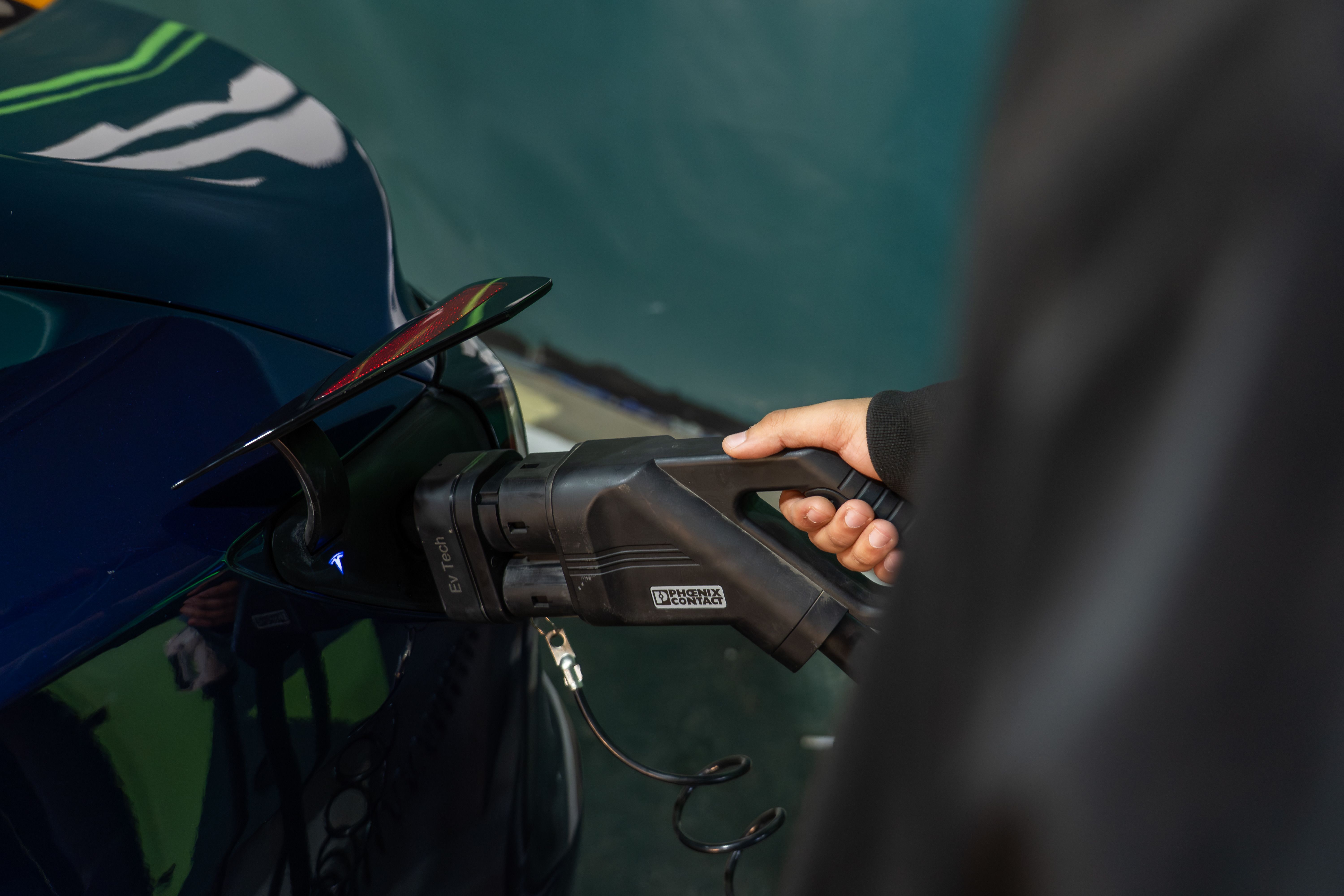
I recorded every charge for eighteen months — where, how much energy, what it cost. The headline finding is that the running cost of an electric car depends almost entirely on where you charge, to a degree that changes the whole calculation.
The spread
Home charging on an overnight tariff was by far the cheapest, at a rate that made the per-mile cost a fraction of petrol.
Home charging on a standard tariff was more expensive but still clearly cheaper than fuel.
Public slow charging was several times the overnight home rate.
And public rapid charging was the most expensive by a wide margin, in some cases approaching or exceeding the per-mile cost of an efficient petrol car.
The ratio between cheapest and most expensive was larger than four to one, for the same energy into the same car.
What this means for who benefits
The uncomfortable conclusion.
Somebody with off-street parking and a home charger on an overnight tariff gets very cheap motoring.
Somebody without off-street parking, dependent on public charging, gets running costs comparable to petrol, plus the inconvenience of charging.
Which means the economic case for an electric car is largely a function of housing rather than of the car, and that is a significant equity issue that gets limited attention.
It also means that advice about running costs is frequently written by people in the first group and does not transfer to the second.
Why rapid charging costs so much
Worth understanding rather than assuming it is profiteering.
Rapid chargers require substantial grid connections, which are expensive to install and carry standing charges regardless of use.
The hardware is expensive and has a finite life.
Utilisation is uneven, so the fixed costs are spread over variable usage.
And some tariffs include demand charges based on peak draw, which rapid charging maximises.
None of that makes it cheap for the user, and it explains why the price differential is structural rather than temporary.
The efficiency variables I did not expect
Things that affected consumption more than I anticipated.
Temperature, substantially. Cold weather reduced range noticeably, through battery chemistry, cabin heating and increased rolling resistance. Winter consumption was materially higher than summer.
Speed, more than in a petrol car. Aerodynamic losses dominate at higher speeds and there is no engine efficiency curve to offset it, so motorway consumption was considerably worse than mixed driving.
Charging losses, which are real and invisible. The energy drawn from the wall exceeds the energy stored, with losses varying by charging speed and temperature. Measuring at the meter rather than from the car's own display showed a gap of several percent.
Preconditioning while plugged in, which improved winter range noticeably by heating the cabin and battery from the mains rather than from the battery.
What I would tell somebody deciding
Work out where you would actually charge, honestly, before anything else. This determines the running cost more than the car does.
If home charging with an overnight tariff is available, the economics are strong.
If not, model the cost using public rapid rates rather than optimistic assumptions, and compare against a genuinely efficient petrol alternative.
Check what public charging actually exists on your regular routes rather than in aggregate coverage claims, and check reliability reports, since a charger that exists and does not work is not a charger.
The things that were better than expected
To be fair, since the above reads negatively.
Maintenance was genuinely lower. No oil, no filters, brakes lasting far longer because of regenerative braking.
Charging at home for the overwhelming majority of journeys meant never visiting a fuel station, which is a convenience that is hard to appreciate until you have it.
And the day-to-day experience of a car that is always full each morning is different from planning refuelling, in a way that outweighed the occasional long-journey inconvenience for me.
The honest summary is that it suits some circumstances extremely well and others poorly, and the marketing does not distinguish between them.
The workplace option
Worth mentioning because it changes the calculation for people without home charging.
Workplace charging, where it exists, is frequently free or cheap and covers a commute entirely, which puts somebody without a driveway into the same economic position as somebody with one.
Availability varies enormously and it is growing, and it is worth asking about explicitly before deciding that public rates are the only option.
Similarly, some destination charging at supermarkets, hotels and car parks is subsidised or free, which for regular routines can cover a meaningful share of usage.
Payment and access friction
An operational cost that does not appear in any per-mile figure.
Public charging networks have historically required their own applications, cards or accounts, which means several apps and several accounts to use the chargers on a single route.
Contactless payment requirements have been introduced in several jurisdictions and coverage is improving, particularly on newer rapid units.
Older installations frequently still require an account, so carrying two or three of the major network cards remains sensible for anybody travelling beyond their usual area.