


Have you ever picked up your phone, only to watch it lag while scrolling through reels or switching between apps? Or felt that sting when the battery dies halfway through your commute? For years, many of us in India and around the world settled for budget phones that felt like compromises. Budget Phones 2026, something has quietly shifted. Those “cheap” phones are now delivering performance that would have amazed us just a couple of years ago.
I remember testing a budget phone back in 2023 that struggled with basic multitasking. Fast forward to today, and devices under ₹20,000 (or around $250 globally) are handling heavy games, crisp photography, and all-day usage without breaking a sweat. What changed? And more importantly, does this mean you can finally skip the expensive flagships?
Let’s dive in and see why budget phones in 2026 feel shockingly powerful — and what it means for everyday users like you and me.
The Big Shift: How Budget Phones Leveled Up
Not long ago, budget phones meant slow processors, mediocre cameras, and screens that looked washed out. Manufacturers cut corners to hit low price points. In 2026, that equation has flipped.
Chipmakers like Qualcomm, MediaTek, and even Google’s Tensor have trickled down efficient, capable silicon to the mid-range and budget segments. Phones now come with 8GB or even 12GB RAM as standard in many models. Storage feels generous too, with UFS options that make apps launch instantly.
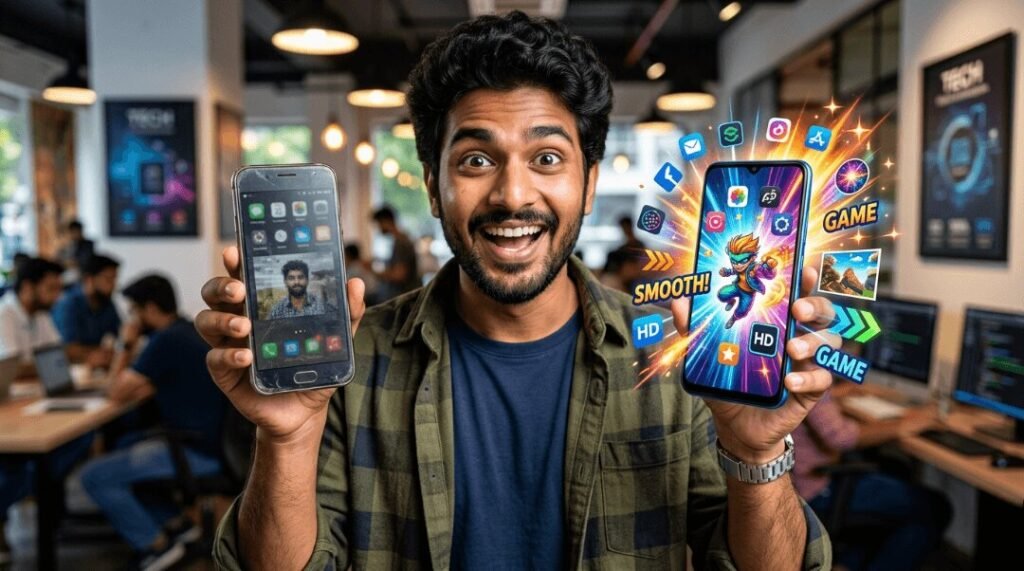
The surprising part? Many of these devices now use the same display technologies — bright AMOLED panels with 120Hz refresh rates — that once belonged only to premium phones. Colors pop, scrolling feels buttery smooth, and outdoor visibility has improved dramatically.
Here’s the surprising part: the gap between a ₹15,000–25,000 phone and a ₹60,000+ flagship is narrower than ever for daily tasks. For most people — scrolling social media, watching videos, light gaming, or clicking family photos — the difference is barely noticeable.
Did you know? Some budget models in 2026 even offer IP ratings for dust and water resistance, vegan leather finishes, and fast charging speeds that rival older flagships.
Why This Matters Right Now in 2026
Prices of components have dropped. Better manufacturing and competition, especially from brands like Motorola, Nothing, Poco, Realme, Samsung’s A-series, and CMF, have forced everyone to deliver more value.
In India, where value for money rules buying decisions, this shift feels even bigger. With inflation and rising costs, people want phones that last 3–4 years without feeling outdated quickly. Budget phones today deliver exactly that for many users.
Think about your own usage. Do you really need a flagship camera with 200MP sensors and periscope zoom for casual shots? Or a processor that can run the latest AAA games at max settings if you mostly play casual titles like Candy Crush or BGMI on medium?
For the average user in Lucknow or any Indian city — commuting, studying, running a small business, or staying connected with family — these powerful budget phones cover 90% of needs without the premium price tag.
Key Changes That Made Budget Phones Powerful
1. Processors: Efficiency Over Raw Power
Modern budget phones use chips like MediaTek Dimensity 7300/7400 series, Snapdragon 7s Gen 4, or even recycled but optimized Tensor chips in Pixel A-series. These handle multitasking, AI features, and moderate gaming smoothly.
They may not match Snapdragon 8 Elite in benchmarks, but in real life? They rarely stutter during normal use. Gaming performance has improved too — many handle popular titles at 60fps without overheating quickly.
2. Displays That Punch Above Their Weight
120Hz AMOLED or pOLED screens are now common even under ₹20,000. Higher brightness (up to 2000+ nits in some) means you can use them comfortably in bright Indian sunlight. Curved edges and slim bezels give a premium feel that was missing before.
3. Cameras: Good Enough for Most Moments
50MP main sensors with better processing deliver sharp daylight shots and decent low-light performance. Some include telephoto lenses or useful ultrawides — features once reserved for expensive models.
AI enhancements help with scene detection, portrait modes, and even basic editing. Not flagship level, but perfect for Instagram stories, family functions, or quick clicks.
4. Battery Life and Charging: The Real Game Changer
Batteries of 5000–7000mAh are standard. Combined with efficient chips, many phones easily last 1.5–2 days on moderate use. 45W–68W fast charging means you can go from low to full in under an hour.
This matters hugely in India, where power cuts or long travel days are common.
5. Software and AI Features Trickling Down
Clean interfaces, longer update promises (Samsung and Google leading with 5–7 years in some A-series and Pixel a-models), and on-device AI for call screening, photo editing, or smart replies are appearing in budget segments.
Nothing’s glyph interface or Motorola’s clean Android experience add personality without bloat.
Real-World Examples: Phones That Impress in 2026
Take the Motorola Edge 60 Fusion or similar models around ₹20,000 — curved AMOLED, solid Dimensity chipset, good cameras, and IP rating. It feels premium in hand with vegan leather options.
Poco and Realme devices often shine in performance and charging speed, perfect for gamers on a budget.
Samsung Galaxy A-series (like A37 or A57) brings reliable software support and consistent cameras that many trust for daily reliability.
Google Pixel a-series continues to wow with photography magic and clean experience, even if hardware feels slightly older.
Nothing Phone models stand out with unique design and smooth software.
In global tests, phones like Samsung Galaxy A17 5G or Moto G Power variants deliver all-day battery and capable performance under $300.
These aren’t perfect, but they handle real life beautifully — whether you’re a student in Uttar Pradesh juggling classes and content creation, or a professional needing reliable calls and navigation.
Pros and Cons: Honest Insights
Pros:
- Excellent value — get 80-90% of flagship experience at 30-50% cost.
- Longer battery life in many cases.
- Faster charging and brighter screens.
- Improved durability features.
- AI smarts making phones feel smarter.
Cons:
- Camera consistency in challenging light can still lag behind flagships.
- Software support might be shorter on some brands (2-3 years vs 5-7 on others).
- Premium materials and wireless charging are rarer.
- Heavy gaming or pro video editing may show limitations over time.
The key insight? For 80% of users, the cons don’t matter much. The savings can go toward accessories, a good case, or even saving for something else.
What to Expect in the Next 3–6 Months
More AI integration is coming — on-device processing for better privacy and speed. Expect improved ultrawide and selfie cameras in budget lines. Foldables and dual-screen experiments might trickle down slightly, though still premium for now.
In India, festive seasons often bring better deals, so keeping an eye on models with strong after-sales support makes sense.
Competition will keep pushing brands to offer more RAM, better displays, and longer updates without raising prices much.
Actionable Tips Before Buying a Budget Phone in 2026
- Prioritize your needs — battery and software support for heavy users; performance and display for gamers/content consumers.
- Check real-user reviews on battery drain and heating during Indian summers.
- Look for models with at least 8GB RAM and expandable storage if possible.
- Test in-store for feel and camera samples in your typical lighting.
- Compare update policies — longer support means the phone stays useful longer.
- Consider trade-in or exchange offers to stretch your budget further.
Ask yourself: When was the last time your current phone truly frustrated you? If it’s still running fine, maybe wait. But if it lags or the battery is weak, 2026 budget options could be the perfect upgrade without regret.
Future Outlook: Are Flagships Still Worth It?
Flagships will always lead in ultimate camera quality, raw power, and exclusive features. But for most people, the “good enough” bar has moved so high that budget and mid-range phones deliver joyful experiences.
In 2026, the smartest buy often isn’t the most expensive one. It’s the one that matches your actual usage and leaves money in your pocket.
The change feels exciting because technology is finally democratizing powerful computing. Phones are tools, not status symbols for many of us.
What do you think — has your budget phone surprised you lately with its performance? Or are you still holding out for that flagship dream?
FAQs
1. Are budget phones in 2026 really as powerful as flagships? Not exactly equal, but shockingly close for everyday tasks like multitasking, streaming, and casual photography. The difference shows mainly in extreme gaming or professional photography.
2. Which budget phone offers the best battery life in 2026? Models with 6000mAh+ batteries and efficient chips from Motorola, Poco, or Realme often last 1.5–2 days. Check specific reviews for your usage pattern.
3. Do budget phones get good software updates in 2026? It varies. Samsung and Google lead with longer support (up to 6–7 years in some models). Others offer 2–4 years. Always check before buying if longevity matters to you.
4. Is it worth buying a budget phone instead of a flagship in 2026? For most users in India and globally — yes. You save significantly while getting smooth performance, great displays, and reliable cameras. Flagships shine for enthusiasts needing the absolute best.
5. What should I look for in a powerful budget phone under ₹20,000? Prioritize 120Hz AMOLED display, at least 8GB RAM, fast charging (45W+), decent main camera, and good build with IP rating if possible.
Budget phones in 2026 prove that power doesn’t always need a premium price tag. The real win? You get to enjoy modern smartphone experiences without the financial stress. Next time you’re shopping, look beyond the big numbers on spec sheets — real-world performance tells the better story.
If this shift has you rethinking your next phone, drop a comment with your current device or what you’re looking for. Let’s discuss what matters most in 2026.