
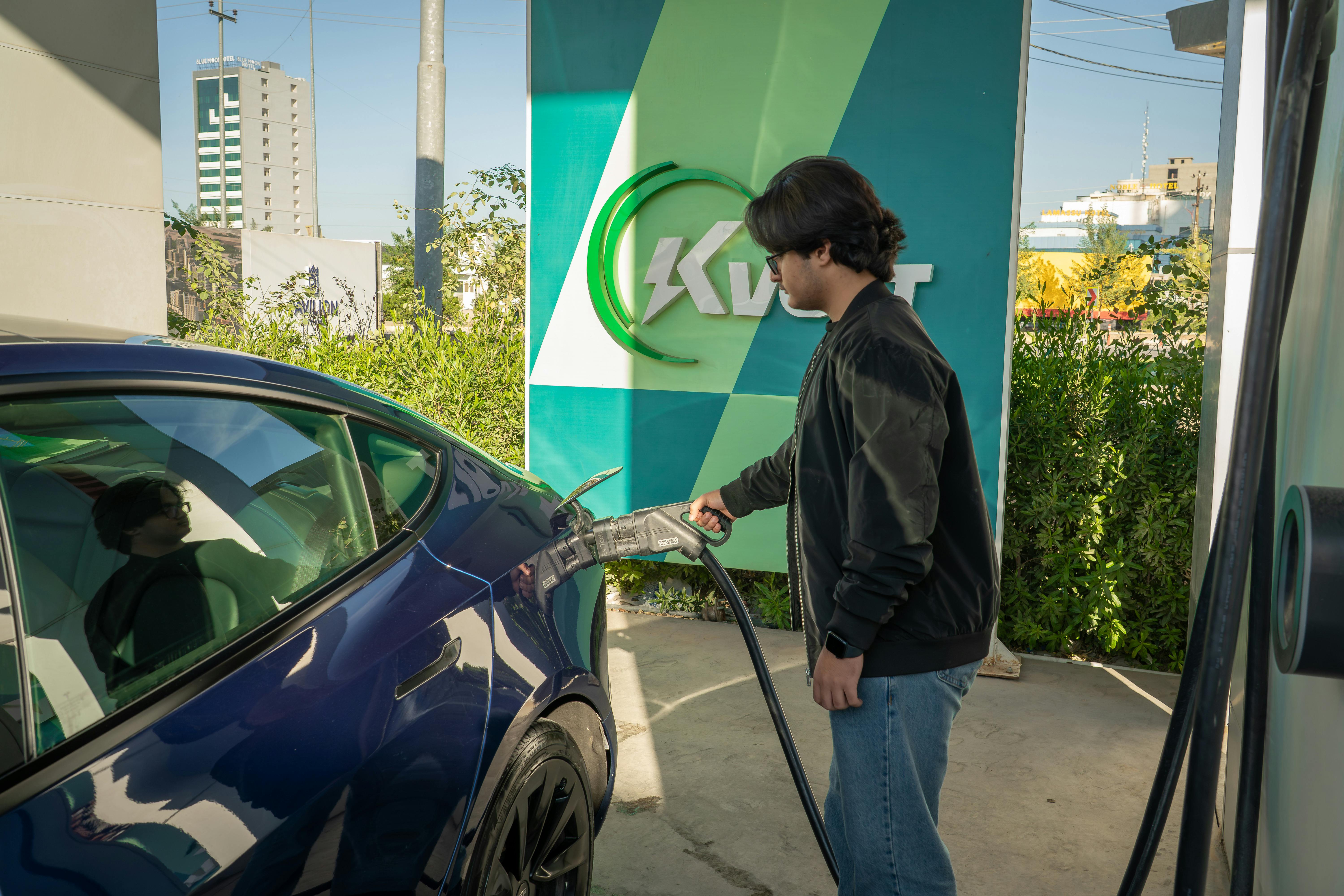
In 2026, your electric vehicle isn't just transport; it's a powerful, profit-generating home energy hub. Discover how Vehicle-to-Grid (V2G) and Vehicle-to-Home (V2H) technologies, coupled with smart charging, are transforming energy independence, saving you money, and supporting a greener grid. Explore the best bidirectional chargers and compatible EVs available now, and unlock the full potential of your electric future.
Introduction to the Topic
Imagine a world where your electric vehicle isn't just a mode of transport, but an active, intelligent participant in your home's energy ecosystem and even the national power grid. Welcome to 2026, where this vision is rapidly becoming a reality thanks to groundbreaking advancements in Vehicle-to-Grid (V2G) and Vehicle-to-Home (V2H) technologies. For years, EVs have been celebrated for their zero-emission driving, but their true potential as mobile energy storage units is now being fully realized. This isn't just about charging your car; it's about your car charging your home, selling energy back to the grid, and significantly reducing your electricity bills – all while contributing to a more resilient, sustainable energy future. If you're considering an EV purchase or looking to maximize your current electric ride, understanding V2G and V2H is no longer optional; it's essential for unlocking unparalleled savings and energy independence.
Backgrounds & Facts
The concept of bidirectional charging, the backbone of V2G and V2H, has been a topic of research for over a decade. However, it's only now, in 2026, that the technology, infrastructure, and regulatory frameworks are converging to make it a mainstream reality. V2G allows your EV to not only draw power from the grid but also send surplus energy back to it. This can happen during peak demand periods when electricity prices are high, or when the grid needs stabilization from intermittent renewable sources like solar and wind. V2H, a subset of V2G, specifically enables your EV to power your home during outages or to offset expensive grid electricity, effectively turning your car into a giant, mobile home battery.
The magic behind V2G/V2H lies in bidirectional DC fast chargers, which can convert AC power from the grid to DC for the battery, and vice-versa. These smart chargers communicate with your home's energy management system and, often, with your utility provider or a third-party aggregator. This allows for intelligent energy flow, optimizing charging and discharging cycles based on electricity prices, grid demand, and your personal energy needs. With increasing adoption of renewable energy and the growing threat of grid instability from extreme weather events, the ability of millions of EVs to act as distributed energy resources is a game-changer. Governments globally are now offering incentives for V2G installations, recognizing their critical role in grid modernization and decarbonization efforts. Standards like ISO 15118-20 are further streamlining communication between vehicles and charging infrastructure, paving the way for seamless integration.
Expert Opinion / Analysis
Industry experts universally agree that V2G and V2H represent the next significant leap in EV utility. Dr. Anya Sharma, a leading energy systems analyst, states, "By 2030, we expect over 20% of new EVs sold to be V2G-enabled, contributing gigawatts of flexible storage to the grid. This isn't just about individual savings; it's about national energy security and accelerating the transition to 100% renewable energy." The primary concern often raised by consumers is battery degradation. However, extensive research and real-world pilot programs have shown that with intelligent battery management systems, the impact of V2G/V2H on battery health is minimal, often negligible, and far outweighed by the financial and environmental benefits. Modern EV batteries are designed with robust cycling capabilities, and V2G algorithms are optimized to operate within parameters that preserve battery longevity.
Utility companies, initially cautious, are now actively embracing V2G. Many are launching pilot programs and offering financial incentives for EV owners to participate. "V2G provides unparalleled flexibility," explains Mark Jensen, CEO of GridCo Energy. "Instead of building more expensive peaker plants, we can tap into the immense storage capacity of parked EVs. This reduces infrastructure costs for consumers and makes our grid far more resilient against fluctuations and outages." The rise of third-party energy aggregators is also simplifying participation, allowing EV owners to sign up for V2G programs that automatically manage energy flow, ensuring optimal returns without constant manual intervention. This ecosystem of compatible EVs, smart chargers, and intelligent energy management is poised to redefine how we interact with electricity.
💰 Best Options in Comparison (VERY IMPORTANT)
Entering the V2G/V2H ecosystem requires two key components: a compatible electric vehicle and a bidirectional charging station. The good news is that by 2026, several leading manufacturers offer vehicles with V2G/V2H capabilities, and the market for home bidirectional chargers is rapidly expanding.
Top V2G/V2H Compatible Electric Vehicles (2026 Models):
- Ford F-150 Lightning (Pro Power Onboard & V2H): A trailblazer in V2H, the Lightning's Pro Power Onboard system can power an entire home for days during an outage when paired with the Ford Charge Station Pro and Home Integration System. Ideal for those seeking robust backup power.
- Hyundai IONIQ 5 & IONIQ 6 (V2L & V2H Capable): While primarily known for Vehicle-to-Load (V2L) which powers external devices, Hyundai's E-GMP platform is increasingly integrating full V2H capability through specific bidirectional chargers. Expect seamless home integration by 2026.
- Kia EV6 & EV9 (V2L & V2H Ready): Similar to Hyundai, Kia's E-GMP based vehicles are V2H-ready with the right charging infrastructure. The EV9, especially, with its larger battery, is a strong contender for significant home backup.
- Nissan LEAF (CHAdeMO V2G Pioneer): The LEAF was one of the first to offer V2G capabilities using the CHAdeMO standard. While newer vehicles are moving towards CCS, the LEAF remains a solid, accessible option for V2G participation in regions with CHAdeMO infrastructure.
- Volkswagen ID. Series (Future-Proofed for V2G): VW Group has announced that its MEB platform vehicles, including the ID.4, ID.5, and upcoming ID. Buzz, are designed for bidirectional charging and will roll out V2G capabilities with software updates and compatible hardware.
Leading Bidirectional Home Charging Stations (2026):
- Wallbox Quasar 2: A sleek, compact, and highly intelligent bidirectional DC charger. Supports CCS and CHAdeMO, offering up to 11.5 kW of power for V2H and V2G. Features intuitive app control and integration with home energy management systems. Price: ~$6,000 - $8,000.
- Enphase IQ EV Charger (Bidirectional): Integrated seamlessly with Enphase's solar and home battery ecosystem, this charger offers comprehensive energy management. Ideal for homes with existing solar installations looking for full energy independence. Up to 12 kW. Price: ~$7,500 - $9,500 (often bundled with solar/storage).
- Electrify America HomeStation (V2G Enabled): As part of its broader charging network, Electrify America is rolling out V2G-enabled HomeStations. These are designed for broad compatibility with CCS vehicles and offer robust V2G services, often in partnership with local utilities. Price: ~$5,500 - $7,500.
- Ford Charge Station Pro & Home Integration System: Specifically designed for the F-150 Lightning, this integrated system enables full V2H capability. While proprietary, it offers a guaranteed, robust solution for Lightning owners. Price: ~$4,000 - $6,000 (charger + integration hardware).
Choosing the right setup depends on your EV model, budget, and desired level of energy independence. Many utilities also offer rebates and incentives that can significantly reduce the upfront cost of these systems.
| Charger Model | Compatible EV Connector | Max Bidirectional Power | Key Features | Est. Price Range (USD) |
|---|---|---|---|---|
| Wallbox Quasar 2 | CCS, CHAdeMO | 11.5 kW | Compact, app-controlled, V2H/V2G, energy management | $6,000 - $8,000 |
| Enphase IQ EV Charger | CCS | 12 kW | Seamless solar/storage integration, advanced EMS | $7,500 - $9,500 |
| Electrify America HomeStation | CCS | Up to 15 kW (varies) | Broad CCS compatibility, utility partnerships, robust | $5,500 - $7,500 |
| Ford Charge Station Pro | Proprietary (Ford J1772) | 9.6 kW (V2H) | Integrated with F-150 Lightning, full home backup | $4,000 - $6,000 |
Outlook & Trends
The future of V2G and V2H is incredibly bright. By the end of the decade, we anticipate a significant increase in the number of V2G-enabled EVs, with virtually all new models from major manufacturers incorporating the capability as standard. The adoption of the ISO 15118-20 standard, which includes Plug & Charge and bidirectional power flow, will make the user experience even more seamless, allowing for instant, secure communication between EVs and charging infrastructure. We'll see more sophisticated energy management systems that learn your habits and optimize energy flow autonomously, maximizing savings and grid contributions.
Beyond individual homes, community V2G projects are gaining traction, where entire fleets of EVs in workplaces or apartment complexes contribute to local grid stability. Imagine a future where public chargers aren't just for charging, but also for selling energy back to the local grid, creating new revenue streams for parking lot operators and EV owners alike. The convergence of renewable energy, smart home technology, and electric vehicles is creating a truly decentralized, resilient, and intelligent energy network, with your EV at its very heart. This isn't just about driving; it's about powering the future, one intelligent charge at a time.
Conclusion
The year 2026 marks a pivotal moment for electric vehicle technology, where the promise of V2G and V2H is moving from niche applications to mainstream adoption. Your EV is no longer just a cleaner, faster way to get around; it's a powerful asset in your pursuit of energy independence, a tool for reducing your carbon footprint, and a smart investment that can genuinely save you money. By choosing a V2G/V2H compatible EV and investing in a bidirectional charger, you're not just buying a car; you're buying into a future where you have greater control over your energy, contribute to a more stable grid, and participate in a revolutionary shift towards sustainable living. Don't just drive electric – empower your home and your wallet. Start exploring the best V2G solutions today and transform your EV into the ultimate smart energy hub.