
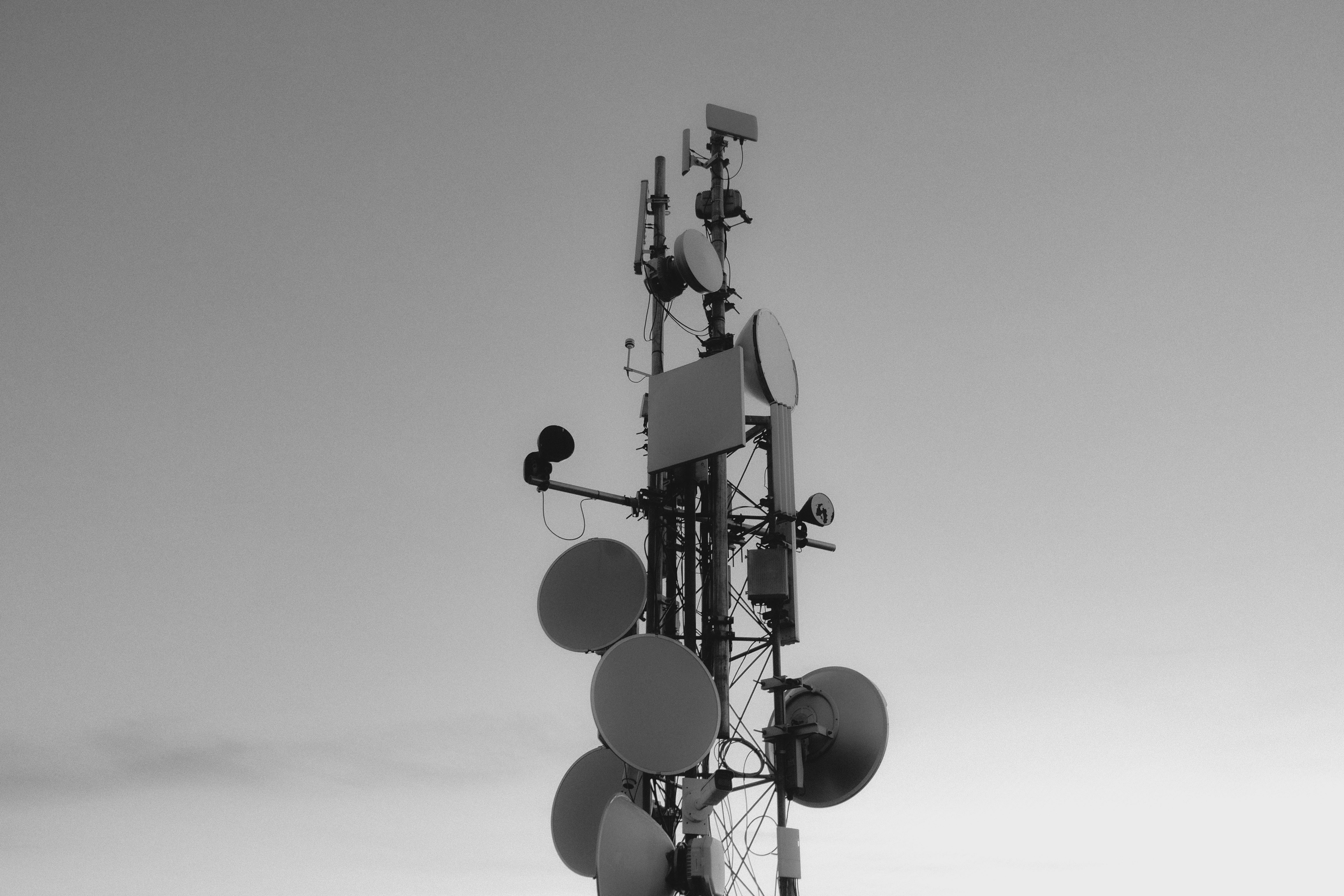
In 2026, Private 5G networks are no longer a futuristic concept but a critical competitive advantage for enterprises seeking unparalleled connectivity, security, and control. Discover how dedicated 5G solutions are revolutionizing industries from manufacturing to logistics, and learn to compare the best private 5G providers, deployment models, and ROI strategies to drive your digital transformation and secure your business's future.
Introduction to the Topic
Welcome to 2026, where the promise of 5G has matured into a tangible reality, especially within the confines of enterprise operations. While public 5G networks continue to expand, a more profound revolution is taking place behind closed doors: the widespread adoption of Private 5G networks. For businesses across every sector, from sprawling factories and bustling logistics hubs to critical healthcare facilities and smart cities, dedicated 5G infrastructure is no longer an optional upgrade but a strategic imperative. This isn't just about faster internet; it's about unlocking unprecedented levels of automation, real-time data processing, enhanced security, and mission-critical reliability that traditional Wi-Fi or public cellular networks simply cannot deliver. As we navigate a world increasingly reliant on IoT, AI at the edge, and immersive technologies, the ability to own and control your connectivity fabric is the ultimate differentiator. This comprehensive guide will equip you with the knowledge to understand, evaluate, and ultimately invest in the right private 5G solution for your organization, ensuring maximum return on investment and a future-proof digital foundation.
Backgrounds & Facts
The journey to Private 5G began with the limitations of existing connectivity solutions. While Wi-Fi 6E and soon Wi-Fi 7 offer robust local area networking, they often struggle with the scale, mobility, and deterministic latency required for industrial automation, large-scale IoT deployments, and autonomous systems. Public 5G, while powerful, brings inherent challenges for enterprises, including shared spectrum congestion, security concerns over data sovereignty, and a lack of granular control over network performance. This gap paved the way for Private 5G – a bespoke, dedicated cellular network deployed specifically for an organization's internal use.
Key characteristics defining Private 5G in 2026 include:
- Dedicated Spectrum: Utilizing licensed, shared (like CBRS in the US), or local spectrum to guarantee performance and avoid interference.
- Enhanced Security: End-to-end encryption, network isolation, and data localization capabilities, crucial for sensitive operations and regulatory compliance.
- Ultra-Low Latency & High Bandwidth: Essential for real-time control of robotics, AR/VR applications, and massive sensor arrays.
- Massive Device Connectivity: Designed to connect millions of IoT devices per square kilometer reliably.
- Customizable & Scalable: Tailored to specific operational needs and easily expandable as business requirements grow.
- Edge Computing Integration: Seamlessly integrates with edge infrastructure, processing data locally for immediate insights and actions.
The market for private wireless networks is exploding. Industry analysts project the global private 5G market to reach tens of billions of dollars by 2028, with a significant compound annual growth rate (CAGR) from 2023. Manufacturing, logistics, energy, ports, mining, healthcare, and defense are leading the charge, recognizing the profound impact on operational efficiency, safety, and innovation. Regions like North America, Europe, and Asia are seeing rapid deployments, driven by supportive regulatory frameworks for spectrum access and a growing ecosystem of vendors and service providers. Understanding these foundational elements is crucial for any business considering a private 5G investment.
Expert Opinion / Analysis
From a strategic perspective, the adoption of Private 5G is a fundamental shift in how enterprises manage their digital infrastructure. "It's about data sovereignty and operational independence," states Dr. Anya Sharma, a leading telecommunications strategist. "In an increasingly connected world, relying solely on public infrastructure introduces vulnerabilities and limits innovation. Private 5G gives enterprises the keys to their own digital destiny."
The primary strategic advantages for businesses deploying enterprise 5G solutions include:
- Unrivaled Control: Full command over network policies, security protocols, and quality of service (QoS) for critical applications.
- Enhanced Data Security: Keeping sensitive operational data within the enterprise perimeter, mitigating cyber risks and ensuring compliance with data privacy regulations.
- Predictable Performance: Guaranteed latency and bandwidth, vital for automation, robotics, and real-time decision-making.
- Innovation Catalyst: Enabling new business models and applications, such as AI-powered quality control, autonomous guided vehicles (AGVs), remote expert assistance via AR, and predictive maintenance.
- Operational Efficiency: Streamlining processes, reducing downtime, and optimizing resource utilization across complex environments.
However, the journey isn't without its challenges. The initial investment in infrastructure, spectrum acquisition, and deployment expertise can be substantial. Furthermore, integrating a new private cellular network with existing IT and operational technology (OT) systems requires careful planning and skilled personnel. This often leads to the critical "build vs. buy" dilemma: should an enterprise build and manage the network themselves, or partner with a private 5G service provider? The answer depends heavily on internal capabilities, budget, and desired level of control. "Many enterprises underestimate the complexity of managing a cellular network," advises Mark Jensen, CEO of ConnectEdge Solutions. "For most, a managed service or hybrid approach offers the best balance of control and operational simplicity." As 5G deployment becomes more streamlined, new 'network-as-a-service' models are emerging, making private 5G more accessible than ever before.
💰 Best Options in Comparison (VERY IMPORTANT)
Choosing the right private 5G solution in 2026 involves navigating a diverse landscape of vendors, service models, and technologies. Your decision will depend on your specific industry, operational scale, budget, and internal technical expertise. Here, we outline the leading options and provide a clear comparison to help you make an informed purchasing decision.
Key Private 5G Deployment Models:
- Full-Stack Integrated Solutions: These are comprehensive, often proprietary, packages offered by major telecom equipment vendors. They typically include all necessary hardware (RAN, core network), software, and often deployment/management services. Ideal for enterprises seeking a proven, end-to-end solution with robust support.
- Managed Service Providers (MSPs): These providers (often mobile network operators or specialized integrators) design, deploy, and manage the private 5G network on your behalf. This 'network-as-a-service' model significantly reduces the operational burden on the enterprise. Excellent for those wanting to offload complexity and leverage expert operational support.
- DIY / Component-Based Solutions: For enterprises with strong in-house IT/telecom expertise, this involves sourcing individual components (e.g., open-source core, disaggregated RAN hardware/software from different vendors) and integrating them. Offers maximum customization and potentially lower long-term costs but demands significant technical capability.
Top Private 5G Providers & Solutions in 2026:
- Nokia Digital Automation Cloud (DAC): A leading integrated solution, offering a compact, plug-and-play private 5G system. Known for its strong industrial focus, ease of deployment, and extensive ecosystem of industrial applications. Offers both sub-6 GHz and mmWave options, and supports CBRS. Strong for manufacturing, ports, and logistics.
- Ericsson Industry Connect: Similar to Nokia DAC, Ericsson provides a pre-integrated, easy-to-deploy private network solution optimized for industrial use cases. Focuses on robust performance and scalability, often leveraging their strong partnerships with operators and system integrators. Popular in heavy industry and automotive.
- AWS Private 5G: Amazon's entry into the private 5G space offers a unique cloud-integrated approach. It's a managed service that deploys private cellular networks on-premises, integrating seamlessly with AWS cloud services for edge computing and data processing. Ideal for enterprises already heavily invested in AWS and seeking a pay-as-you-go model.
- Verizon Business Private 5G & AT&T Private 5G: These major mobile network operators leverage their extensive expertise and licensed spectrum to offer fully managed private 5G networks. They provide end-to-end services, from planning and deployment to ongoing management and support, often with dedicated slices of their public network or fully isolated infrastructure. Strong for large enterprises needing comprehensive, reliable support.
- CBRS Alliance Solutions (e.g., Celona, Federated Wireless, CommScope): These solutions leverage the shared CBRS spectrum in the US, offering a more accessible and cost-effective entry point for private 5G, particularly for medium-sized enterprises. They often provide flexible, cloud-managed private network options, allowing for significant customization.
Comparing Your Private 5G Options: 2026 Edition
| Feature / Option | Full-Stack Integrated (e.g., Nokia, Ericsson) | Managed Service Provider (e.g., Verizon, AT&T, AWS) | DIY / Component-Based (e.g., Celona, open-source core) |
|---|---|---|---|
| Deployment Complexity | Medium to Low (pre-integrated, vendor support) | Very Low (provider handles everything) | Very High (requires significant internal expertise) |
| Initial Investment | High (upfront hardware/software) | Medium (subscription-based, less upfront) | Variable (can be lower for components, higher for integration) |
| Operational Cost | Medium (internal staff + maintenance) | Medium to High (ongoing service fees) | Potentially Low (if in-house expertise is strong), but high for troubleshooting |
| Customization & Control | High (within vendor ecosystem) | Medium (dependent on provider's offerings) | Very High (full control over every component) |
| Spectrum Options | Licensed, Shared (CBRS), Local | Licensed, Shared (CBRS), Local | Shared (CBRS), Local (most common) |
| Best For | Large enterprises, industrial, mission-critical, seeking robust support. | Enterprises wanting hands-off management, leveraging MNO expertise. | Tech-savvy organizations, specific niche use cases, budget constraints. |
When evaluating these options, consider not just the upfront cost but the total cost of ownership (TCO), including operational expenses, maintenance, and the value of guaranteed uptime and performance. Engage with multiple private 5G vendors and service providers, request detailed proposals, and consider pilot projects to thoroughly test solutions in your specific environment. The right choice will significantly impact your long-term operational efficiency and competitive edge.
Outlook & Trends
Looking beyond 2026, the evolution of Private 5G is set to accelerate further. The impending arrival of 5G-Advanced (3GPP Release 18 and beyond) and the foundational work on 6G will bring even greater capabilities to private networks. Expect enhanced AI/ML integration directly into the network core and at the edge, enabling more sophisticated automation, predictive analytics, and hyper-personalized services. Network slicing will become more granular and dynamic, allowing enterprises to create multiple virtual networks on their private infrastructure, each optimized for different applications (e.g., one slice for critical robotics, another for employee communications).
The trend towards vertical-specific private 5G solutions will intensify, with vendors offering highly specialized packages for healthcare, ports, smart agriculture, and smart cities. We will also see a rise in more flexible consumption models, including 'Private 5G as a Service' (P5aaS) where the entire network infrastructure, management, and even spectrum are offered on a subscription basis, reducing capital expenditure for businesses. Furthermore, the convergence of private 5G with other connectivity technologies, such as low-earth orbit (LEO) satellite networks for remote sites and next-generation Wi-Fi, will create truly hybrid and resilient enterprise connectivity ecosystems. The future of enterprise connectivity is undoubtedly private, intelligent, and incredibly dynamic.
Conclusion
In 2026, Private 5G networks represent a pivotal investment for any enterprise serious about digital transformation, operational excellence, and competitive differentiation. By offering unparalleled security, control, performance, and the ability to innovate at the edge, these dedicated networks are reshaping industries worldwide. From navigating the complexities of spectrum options to comparing the best private 5G providers like Nokia, Ericsson, AWS, Verizon, and AT&T, making an informed decision is paramount. Don't let your business be left behind; evaluate your needs, consult with experts, and embark on your private 5G journey today to unlock billions in value and secure your future in the hyper-connected world.